Top Professional Facial Machines How Much Does One Cost?

Time:2026-09-23 Author:Ethan
0%

Choosing the right facial machine can change a treatment room’s results, workflow, and long-term expenses. Many salon owners ask, “how much does a professional facial machine cost” before comparing brands or technologies. The realistic answer depends on the machine’s function, build quality, certifications, and included support. Basic LED or high-frequency devices may cost about $300 to $2,000. Advanced hydrodermabrasion, radio-frequency, ultrasound, or multifunction systems can range from $3,000 to over $30,000.

The purchase price is only one part of the budget. A reliable machine may include training, a product starter kit, warranty coverage, and technical assistance. Consumables also matter. Hydrodermabrasion treatments may require tips, solutions, filters, and replacement hoses. RF equipment can require scheduled servicing and careful electrode inspection. These small costs become noticeable after several months. A lower-priced unit can look attractive, but weak support may create expensive downtime.

Details matter.

This guide compares leading professional facial machines by purpose, performance, features, and total ownership cost. It considers real treatment settings, from a compact studio with one treatment bed to a busy clinic serving many clients daily. Safety controls, operator training, client suitability, and manufacturer reputation deserve equal attention. Prices can vary by region and supplier, so readers should request written quotations before purchasing. Some online listings also omit shipping, taxes, installation, or training fees. That makes direct comparisons difficult, and honestly, many buyers discover this too late. A careful decision balances visible results, dependable service, and realistic business needs rather than choosing the cheapest machine available.
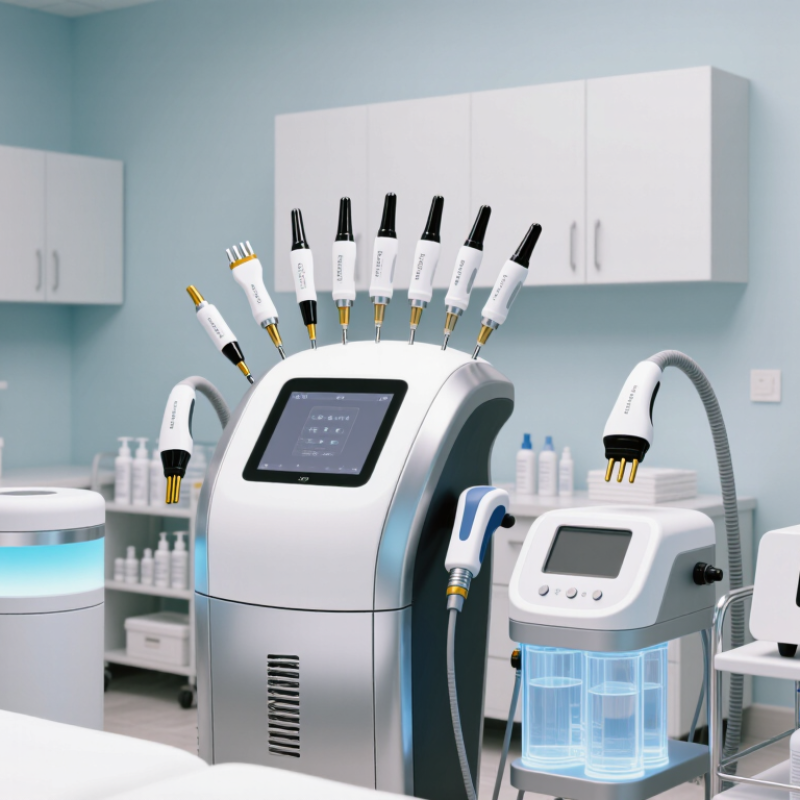
Top Professional Facial Machines How Much Does One Cost?

What Are Professional Facial Machines and How Do They Work?

Professional facial machines combine controlled energy, cleansing, and massage to support specific skin treatments. Common systems use LED light, microcurrent, radiofrequency, ultrasound, or gentle vacuum action. Each method works differently. LED devices deliver selected wavelengths to the skin’s surface. Microcurrent sends low-level electrical signals through conductive gel. Radiofrequency creates controlled heat in deeper tissue layers. Ultrasound uses rapid vibrations to help spread products evenly.

These machines require training, careful assessment, and consistent maintenance. A qualified practitioner should review skin sensitivity, medications, allergies, and treatment goals before use. Protective eyewear may be necessary for certain light-based procedures. Results can vary, and stronger settings do not always produce better outcomes. That is an easy mistake to make. Professional facial machines may cost about $500 to over $20,000, depending on technology, durability, certifications, and included accessories. Ongoing costs include training, replacement parts, cleaning supplies, and servicing.

Tips: Match the machine to the treatment goal, not popularity. Ask for operating instructions and maintenance records. Test settings conservatively, especially on reactive skin. Keep detailed client notes and photographs. Never treat unexplained irritation without appropriate medical advice. A machine can improve a facial service, but it cannot replace professional judgment. Some claims also sound impressive before reliable evidence supports them. Check the specifications carefully.

Which Types of Professional Facial Machines Are Most Popular?

Among professional facial machines, multifunction hydrodermabrasion systems remain highly popular. They combine cleansing, exfoliation, suction, and serum infusion in one workstation. A typical treatment may use a clear tip, gentle vacuum, and a controlled stream of solution. This setup suits congested skin and clients who want visible freshness without extended downtime. Prices often range from several hundred to several thousand dollars, depending on attachments, output controls, training, and service support.

Radiofrequency machines are also widely used for facial firming. They deliver controlled heat into deeper skin layers, so temperature monitoring and proper technique matter. LED light therapy attracts clinics because sessions are quiet, comfortable, and easy to add after cleansing. Different wavelengths target different treatment goals, but results can be gradual. Ultrasonic scrubbers and infusion devices remain common in smaller studios because they require less space and usually cost less.

Microcurrent equipment has a loyal following, especially for short contouring treatments. However, client expectations need careful management; temporary lifting is not the same as permanent structural change. In practice, the most suitable machine depends on treatment plans, staff education, sanitation procedures, and local professional rules. A low-priced device may become expensive when probes fail or replacement parts are unavailable. I would also question dramatic claims based only on before-and-after photos. Skin type, operator pressure, product choice, and treatment frequency can change the outcome. Some details are easy to overlook.

What Factors Affect the Price of a Professional Facial Machine?

Top Professional Facial Machines How Much Does One Cost?

The price of a professional facial machine depends on more than its treatment menu. Entry-level equipment may cost several hundred dollars, while advanced multi-function systems can exceed several thousand. The gap usually reflects engineering, power control, treatment heads, software, and included accessories.

Technology is a major cost driver. A device combining cleansing, infusion, radio frequency, LED light, or cooling functions needs more components and testing. Treatment precision matters too. Stable energy output can improve comfort and consistency during repeated sessions. It should have clear operating instructions and adjustable settings.

Certification and documentation also influence the purchase price. Reliable suppliers typically provide safety records, technical specifications, staff training, and a meaningful warranty. Installation may cost extra. So can replacement handpieces, filters, probes, and disposable tips. These small expenses quietly affect ownership costs.

Maintenance deserves attention. A low purchase price can become expensive when parts are difficult to source. Ask about service response times and expected repair procedures. A practical buyer should compare the full cost over three years, not only the invoice.

I would not assume the most expensive machine is the best choice. It may offer features a small clinic rarely uses. A cheaper model can also disappoint if its controls feel confusing or its treatment results vary. Test the interface, inspect the build quality, and request realistic training details before paying. Leave room for doubt. That is often where better decisions begin.

Top Professional Facial Machines: How Much Does One Cost? — What Factors Affect the Price of a Professional Facial Machine?
Machine Category Typical Professional Price Range (USD) Primary Treatment Functions Common Professional Users Main Price Factors Typical Treatment Time Important Considerations
Magnifying Lamp $100–$500 Illuminated skin observation, pore inspection, and facial consultation support. Estheticians, beauty schools, and small facial studios. Lens magnification, LED brightness, arm flexibility, base stability, and mobility. Used throughout the consultation or facial service. A basic diagnostic tool rather than a standalone treatment device.
Facial Steamer $200–$1,200 Warm vapor application to soften surface buildup and support cleansing procedures. Spas, salons, esthetic clinics, and training facilities. Water-tank capacity, steam output, swivel arm design, timer controls, and construction quality. Approximately 5–15 minutes per treatment. Steam temperature and distance should be adjusted for sensitive skin and client comfort.
High-Frequency Facial Device $250–$1,500 Surface-level skin treatments using glass electrodes and low-intensity high-frequency current. Professional facial practices and skin-care clinics. Power adjustment, electrode selection, safety controls, handpiece quality, and included accessories. Approximately 3–10 minutes per treatment area. Operators should follow electrical-safety procedures and screen clients for contraindications.
Galvanic Facial Machine $400–$2,000 Uses direct current for ion-based product application and professional desincrustation procedures. Licensed estheticians and advanced skin-care clinics. Current control precision, polarity switching, probe quality, display system, and treatment presets. Approximately 5–15 minutes. Training is important because incorrect settings can cause discomfort or skin irritation.
Ultrasonic Skin Scrubber $300–$1,800 High-frequency vibration for surface exfoliation and product-spreading support. Facial studios, salons, and mobile esthetic services. Vibration frequency, intensity range, stainless-steel spatula design, battery system, and waterproofing. Approximately 5–15 minutes. A non-invasive option that is commonly used as part of a larger facial protocol.
Microdermabrasion System $1,000–$5,000 Mechanical exfoliation using diamond tips or mineral crystals, combined with suction. Medical spas, dermatology offices, and advanced esthetic clinics. Vacuum strength, handpiece quality, tip selection, filtration, control accuracy, and maintenance needs. Approximately 20–40 minutes. Consumable tips, filters, and sanitation requirements add to the ongoing operating cost.
LED Light Therapy Panel $1,000–$6,000 Controlled exposure to specific visible or near-infrared light wavelengths for non-invasive skin care. Skin-care clinics, wellness centers, and medical spas. Wavelength accuracy, irradiance, treatment coverage, cooling system, eye protection, and timer controls. Approximately 10–30 minutes. Performance depends on measured light output, treatment distance, and consistent session protocols.
Hydrodermabrasion System $2,000–$8,000 Combines water-based cleansing, exfoliation, suction, and topical solution application. High-volume salons, spas, and professional facial clinics. Pump quality, solution chambers, vacuum control, handpiece design, treatment modes, and included tips. Approximately 30–60 minutes. Recurring expenses may include treatment solutions, disposable tips, tubing, and cleaning supplies.
Radiofrequency Facial System $3,000–$15,000 Delivers controlled radiofrequency energy for professional skin-tightening and contouring protocols. Medical spas, dermatology practices, and advanced aesthetic clinics. Energy delivery method, temperature monitoring, applicator design, safety sensors, software, and regulatory requirements. Approximately 20–45 minutes. Professional training, informed consent, and strict treatment protocols are essential.
Multi-Function Facial Platform $2,000–$12,000+ Combines several functions such as steaming, high frequency, galvanic current, ultrasonic cleansing, and spray application. Full-service spas, beauty academies, and clinics offering multiple facial protocols. Number of functions, power system, modular handpieces, display interface, warranty, and service support. Approximately 30–90 minutes, depending on the protocol. A multifunction platform can reduce equipment purchases but may require more training and maintenance.
Professional Installation and Training $0–$2,500 additional Equipment setup, operator instruction, treatment protocols, and safety guidance. Clinics purchasing advanced or integrated systems. Equipment complexity, on-site versus remote training, travel requirements, and documentation provided. Approximately 1–8 hours, depending on system complexity. Training may be included in the purchase price or charged separately.
Annual Maintenance and Consumables $200–$2,000+ per year Routine servicing, replacement filters, disposable tips, solutions, electrodes, and sanitation supplies. All professional facial-machine operators. Usage volume, device type, consumable design, service contract, and replacement-part availability. Varies according to daily treatment volume. Total ownership cost should include maintenance and consumables, not only the initial purchase price.

How Much Does a Professional Facial Machine Usually Cost?

A professional facial machine usually costs between $800 and $8,000, depending on its functions, construction, and intended treatment.

Basic cleansing or infusion equipment may sit near the lower end. Multifunction systems with ultrasonic, radio-frequency, or oxygen-related features often cost more.

In my experience, a clinic-ready device with stable performance commonly falls between $2,000 and $5,000. Prices also change by country, electrical requirements, shipping, and local service support.

The purchase price is only one part of the budget.

Ask whether staff training, installation, warranty coverage, and replacement handpieces are included. Consumables can add a steady monthly expense.

A machine with several functions may seem economical, but unused features can become expensive decoration. That is an easy mistake to make.

I once assumed more settings meant better value; practical treatment results depend more on reliability and operator skill.

Request written specifications, safety documentation, and service terms before paying a deposit.

Very low prices deserve careful questions.

The device may have limited calibration support or weak after-sales assistance. On the other hand, the highest price does not automatically prove superior quality.

A realistic evaluation should compare treatment goals, client volume, training needs, and expected maintenance.

Ask for a demonstration using appropriate safety procedures. Check how evenly the energy, vacuum, or infusion function operates.

Small details matter.

A dependable machine should fit the practice, not simply occupy the most impressive space.

How to Choose the Best Facial Machine for Your Business?

Choosing a professional facial machine starts with treatment goals, not a glossy feature list. Basic LED, ultrasonic, or high-frequency systems may cost about $500–$3,000. Multi-function platforms can exceed $10,000. Prices vary by attachments, training, warranty, and service access.

Industry data supports careful planning. Grand View Research projects the medical aesthetics market to grow strongly through 2030, with technology and non-invasive treatments driving demand. The American Society of Plastic Surgeons’ 2023 statistics also show sustained consumer interest in non-surgical procedures. However, market reports use different definitions, so their figures should not become your only evidence. Ask local clients what they actually request. A technically advanced machine may sit unused beside a busy treatment bed.

Tips: Match the device to three measurable needs: treatment time, client demand, and payback period. Calculate expected revenue per session, then subtract consumables, maintenance, training, and downtime. Request a live demonstration using realistic skin concerns. Check whether replacement parts are available. Read the warranty carefully. I would also test the handpiece weight, noise, and cleaning process; these small details affect daily work more than many brochures admit. Keep a written record of results, client feedback, and repairs for ninety days before expanding your equipment range.

FAQS

Which professional facial machines are most popular?

Multifunction hydrodermabrasion systems remain widely used. They combine cleansing, exfoliation, suction, and serum infusion. Radiofrequency machines support facial firming with controlled heat. LED therapy is quiet and comfortable. Ultrasonic scrubbers suit smaller studios. Microcurrent treatments are often brief.

How much does a professional facial machine usually cost?

Prices commonly range from $800 to $8,000. Basic cleansing or infusion devices cost less. Multifunction systems may cost much more. A dependable clinic device often costs $2,000 to $5,000. Shipping, electrical needs, training, and service change the final price. The sticker price is not enough.

What extra costs should a clinic expect?

Budget for training, installation, warranty limits, and replacement handpieces. Consumables create recurring monthly expenses. Maintenance and downtime also reduce profits. Ask about calibration support. Check replacement-part availability. Small costs accumulate.

How should a business choose the right facial machine?

Start with treatment goals, not attractive feature lists. Measure treatment time, client demand, and expected payback. Ask local clients what services they request. A powerful device may remain unused beside a treatment bed. Calculate session revenue after consumables, maintenance, training, and downtime. I may overvalue extra settings sometimes.

Is a multifunction machine always the best investment?

Not necessarily. Unused functions can become expensive decoration. A simpler device may fit a focused treatment menu better. Compare reliability, cleaning time, handpiece weight, and operator training. More functions do not guarantee better results. That is easy to miss.

What should buyers check before paying a deposit?

Request written specifications and safety documentation. Read warranty terms carefully. Confirm installation and staff training details. Ask how quickly replacement parts can arrive. Request a demonstration with appropriate procedures. Watch the vacuum, energy, or infusion operate evenly.

How should clinics manage client expectations?

Explain that results can vary by skin type, pressure, products, and treatment frequency. Microcurrent may create temporary lifting, not permanent structural change. LED results may develop gradually. Question dramatic claims based only on photographs. Photos can mislead. Record realistic outcomes and client feedback.

What operational details affect daily performance?

Test the device’s noise, handpiece weight, and cleaning process. Staff education and sanitation procedures matter greatly. Temperature monitoring is important for heat-based treatments. Keep repair and treatment records for ninety days. Review complaints honestly. A glossy brochure cannot reveal everything.

Conclusion

Professional facial machines are advanced skincare devices designed to support treatments such as cleansing, exfoliation, hydration, skin rejuvenation, and targeted care. They work by using technologies such as suction, controlled water flow, oxygen infusion, radio frequency, ultrasonic vibration, or light-based energy to improve the appearance and feel of the skin. The most popular options vary by business needs, with multifunctional systems often combining several treatment methods in one unit.

When considering how much does a professional facial machine cost, prices can range from a few hundred dollars for basic equipment to several thousand dollars for advanced multifunctional systems. Cost is influenced by the machine’s technology, number of functions, build quality, accessories, training, maintenance, and warranty coverage. To choose the best option, businesses should evaluate their services, treatment goals, budget, available space, staff experience, and expected client demand. A reliable machine should be practical, easy to operate, and suitable for safe, consistent professional skincare treatments.

Ethan

Ethan

Ethan is a seasoned marketing professional with a deep expertise in our company's innovative product line. With a passion for sharing knowledge and insights, he takes the lead in regularly updating our corporate blog, where he explores industry trends, product features, and effective marketing......