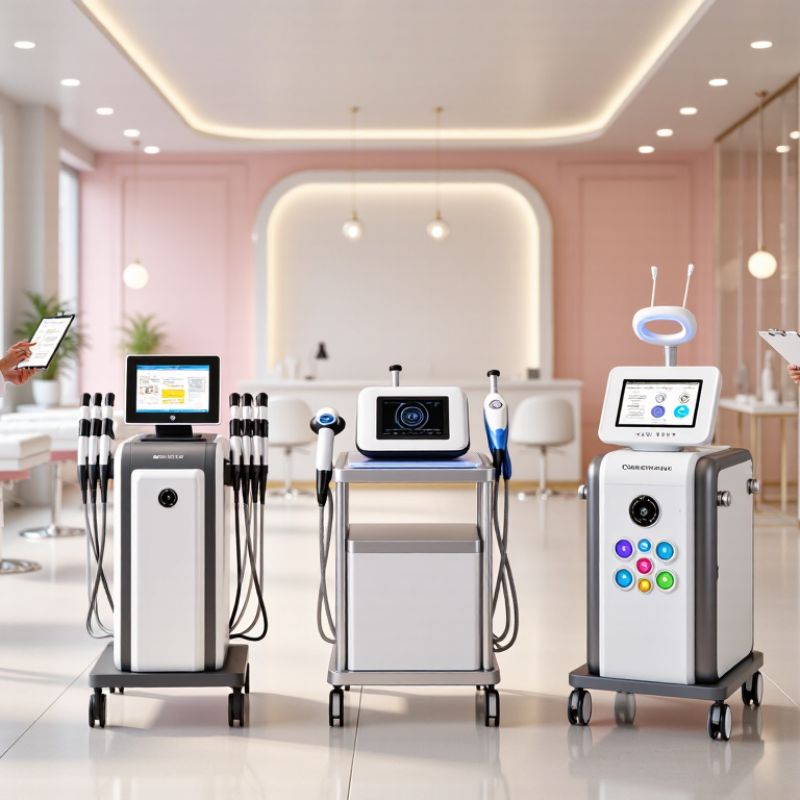
| Ultrasonic Skin Scrubber |
$150–$1,000 |
Surface cleansing, exfoliation, and product-assisted facial treatments. |
Clean and disinfect the spatula after every client; inspect the cable and handpiece regularly. |
Low; mainly cleanser, disinfectant, gloves, and disposable towels. |
2–4 hours of hands-on instruction, including contraindications and sanitation. |
Use only on suitable skin conditions and avoid broken or irritated skin. Follow the device’s electrical-safety instructions. |
Excellent
Low entry cost and simple workflow. |
| LED Phototherapy Panel or Mask |
$300–$2,500 |
Non-invasive cosmetic support for acne-prone skin, redness, and the appearance of fine lines. |
Disinfect contact surfaces after every treatment; check LEDs, timers, eye protection, and cables periodically. |
Low; protective eyewear and disinfectant are usually sufficient. |
2–4 hours, covering light settings, treatment timing, eye protection, and contraindications. |
Clients using photosensitizing medication or with light-sensitive conditions may require medical clearance. Use appropriate eye protection. |
Excellent
Easy to add to existing facial services. |
| High-Frequency Facial Device |
$150–$1,200 |
Post-cleansing facial treatments and temporary support for oily or blemish-prone skin. |
Disinfect electrodes after every use; inspect glass electrodes for cracks and replace damaged parts immediately. |
Low; disinfectant and replacement electrodes when required. |
3–5 hours, including electrode handling, timing, skin assessment, and electrical precautions. |
Follow contraindications such as certain implanted electronic devices, pregnancy-related restrictions, or damaged skin according to local guidance. |
Very Good
Affordable, but proper handling is essential. |
| Microcurrent Facial Device |
$500–$3,000 |
Temporary facial toning and appearance-focused lifting treatments using low-level electrical current. |
Clean probes after every client; inspect leads and connectors; test output according to the service manual. |
Low to moderate; conductive gel is normally required for each treatment. |
4–8 hours, including polarity, current settings, facial mapping, and contraindications. |
Do not use over unsuitable areas or on clients with relevant electronic implants or other contraindications identified by the manufacturer and local rules. |
Very Good
Good add-on service with manageable training. |
| Hydrodermabrasion System |
$2,000–$8,000 |
Water-based cleansing, exfoliation, hydration, and serum infusion treatments. |
Flush and disinfect fluid lines after every client; empty waste containers; replace filters and tubing as scheduled. |
Moderate to high; solutions, tips, filters, and disposable tubing may be needed. |
6–12 hours, including solution handling, pressure control, sanitation, and treatment protocols. |
Requires careful cross-contamination control and correct storage of solutions. Confirm plumbing, drainage, and electrical requirements before purchase. |
Good
Attractive service potential but higher operating complexity. |
| Diamond Microdermabrasion |
$1,000–$4,000 |
Mechanical exfoliation for improving the appearance of uneven texture and dull skin. |
Disinfect handpieces after every treatment; clean the vacuum pathway and replace filters according to the service schedule. |
Moderate; disposable tips or protective supplies may be required. |
6–10 hours, including pressure control, skin assessment, contraindications, and sanitation. |
Avoid excessive pressure and unsuitable skin conditions. Correct vacuum settings help reduce irritation and bruising risk. |
Good
Useful for experienced facial staff. |
| Professional Radiofrequency Facial Device |
$3,000–$15,000 |
Controlled skin-heating treatments intended to improve the appearance of firmness and fine lines. |
Clean the treatment head after every client; inspect cables; verify temperature controls and arrange periodic servicing. |
Low to moderate; conductive gel and disposable supplies are commonly used. |
8–16 hours plus supervised practice, covering temperature monitoring, energy settings, skin assessment, and contraindications. |
Overheating can cause burns. Staff must follow treatment limits, use temperature monitoring, and comply with local training requirements. |
Moderate
Higher revenue potential but greater safety responsibility. |
| Professional IPL Hair-Reduction or Photo-Facial System |
$8,000–$40,000+ |
Light-based cosmetic hair reduction and selected appearance-focused skin treatments. |
Clean the treatment window after every client; check cooling and handpiece condition; arrange calibration and scheduled servicing. |
Low per treatment, but replacement lamps, filters, or handpieces can be expensive. |
16–40+ hours, supervised practice, skin-type assessment, eye protection, patch testing, and emergency procedures. |
Licensing, certification, insurance, medical oversight, and permitted-use rules vary by location. Strictly assess photosensitivity, medications, skin type, and contraindications. |
Advanced
Consider only after confirming local legal and insurance requirements. |
| Oxygen Infusion Facial Device |
$800–$5,000 |
Cosmetic serum application and cooling or refreshing facial treatments. |
Disinfect the nozzle after every use; clean air pathways and replace filters as recommended. |
Moderate; serums, cartridges, tubing, and disposable nozzles may be required. |
3–6 hours, including pressure control, product compatibility, sanitation, and client screening. |
Use only compatible products and avoid applying unsuitable substances under pressure. Maintain clean air and fluid pathways. |
Good
Simple service addition with recurring product costs. |
 Biology Skincare